


Ceramic Coating vs Chassis Paint Explained
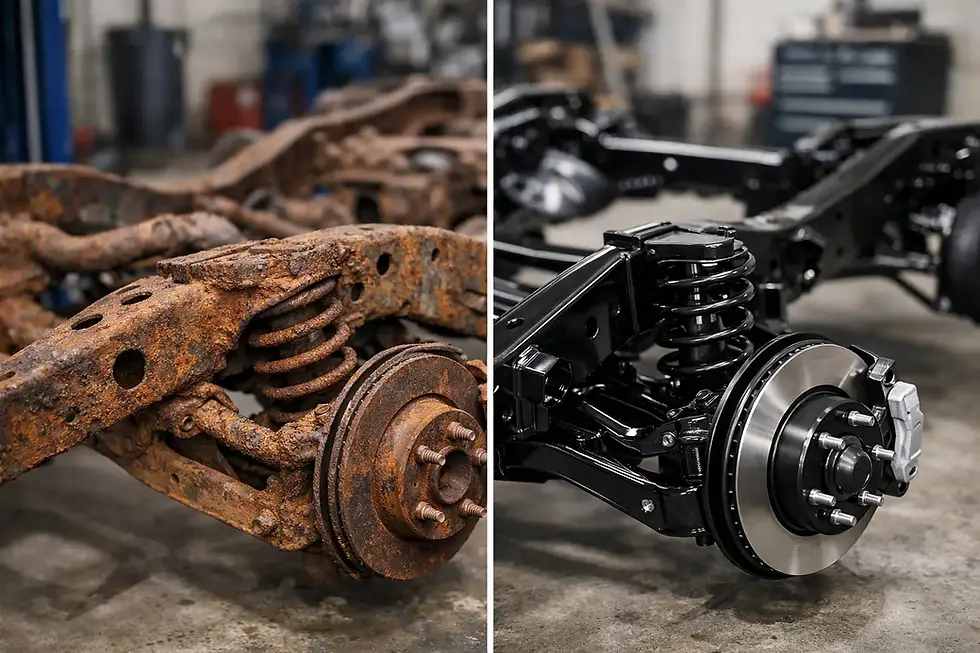
A freshly blasted frame can look perfect for about five minutes. Then humidity, fingerprints, weld scale, and shop dust start working against it. That is why ceramic coating vs chassis paint is not really a style question. It is a question of where the part lives, what it will see, and how much work you are willing to do before it goes back under the vehicle.
For most frames, suspension pieces, axle housings, and underbody components, a purpose-built chassis paint system is the practical answer. Ceramic coatings have real value, especially around heat, but they are not a replacement for a corrosion-control paint system. Do the job right by matching the coating to the part instead of expecting one product to handle every surface on the build.

Ceramic Coating vs Chassis Paint: The Real Difference
Chassis paint is made for metal that takes abuse. It is designed to build film thickness, seal the surface, resist moisture, tolerate road grime, and hold up against chips better than ordinary automotive topcoat. Depending on the system, it may be applied over properly prepared bare metal, epoxy primer, rust treatment, or a compatible encapsulating coating.
Ceramic coating is a broader term, and that matters. Some ceramic products are thin exterior protectants used over cured paint. Others are high-temperature ceramic coatings designed for exhaust manifolds, headers, turbo housings, and other parts that see serious heat. Neither type should be confused with a heavy chassis coating.https://www.gtpracing.com/product-page/eastwood-canada-2k-ceramic-chassis-black-satin-chassis-paint-products
A thin paint-protection ceramic coating adds water behavior, gloss retention, and easier cleaning to a finished painted surface. It does not build enough thickness to stop rock damage on a frame rail. A high-temp ceramic exhaust coating manages heat and protects metal in hot zones, but it is usually not the right choice for a complete chassis that sees gravel, salt, and constant road impact.
The best coating is the one built for the failure you are trying to prevent.
Where Chassis Paint Does Its Best Work
A frame spends its life in the worst possible environment. It sees standing water, road salt, oil, brake dust, sand, tire spray, and impacts from debris. Truck frames and off-road rigs get even more punishment, particularly around rear spring hangers, crossmembers, skid plates, and the inside of boxed sections.
Chassis paint earns its place because it creates a tougher, thicker barrier than a detail-oriented ceramic protectant. A good system can also be repaired. If a jack stand slips, a rock chips a control arm, or you add a bracket later, you can clean the damaged area, prep it, and touch it up without stripping the whole assembly.
Use chassis paint on parts such as frames, subframes, suspension arms, axle housings, differential covers, sway bars, engine cradles, brackets, and underside sheet metal. For restorations, a satin or gloss chassis finish can provide a clean factory-style appearance while still giving the part the protection it needs.
That does not mean every chassis paint can go directly over every surface. Bare steel needs proper prep. Rusted steel needs more than a quick scuff and a coat of black paint. Existing coatings must be tested for adhesion, and greasy parts need to be cleaned until there is no contamination left to cause fish-eyes or peeling.
Where Ceramic Coating Makes More Sense
High-temperature ceramic coatings are for heat management and hot-side durability. Headers, exhaust manifolds, turbo components, downpipes, exhaust sections near the floor, and some race-engine parts are common applications. These coatings can reduce radiant heat, help preserve the metal, and keep the finished part looking better than bare steel that repeatedly cooks and rusts.
On a performance build, that can be more than cosmetic. Lower underhood heat can help protect nearby wiring, hoses, plug boots, sensors, and painted surfaces. On a tight engine bay, controlling radiant heat around a turbo or header is a practical move.
Exterior ceramic protectants have a different job. They belong on cured paint, polished wheels, glass, and other finished surfaces where easier cleaning and water repellency matter. They can be useful on a show truck's painted frame or detailed suspension parts after the paint has fully cured, but think of them as a maintenance layer, not armor.
If a product wipes on like a detail spray, it is not going to replace a paint system under a daily-driven vehicle.
Rust Prevention Starts Before Either Coating
The coating decision is only half the job. Surface preparation determines whether that coating stays attached when the weather turns ugly.
A clean, blasted surface gives you the best starting point. Abrasive blasting removes rust scale, old failing finish, and contamination while creating a mechanical profile for the coating to grip. If blasting is not possible, use aggressive mechanical cleaning, remove loose scale completely, and treat remaining corrosion with a compatible rust-control product before priming and painting.
After prep, move quickly. Bare steel can flash rust surprisingly fast, especially in a humid shop. Blow off abrasive media, vacuum seams and corners, clean with the correct surface cleaner, and avoid touching prepped metal with bare hands. Oils from your skin are enough to create adhesion problems on a fresh panel or suspension part.
For a frame that has hidden rust inside boxed rails, remember that exterior paint cannot protect surfaces it never reaches. Internal frame coating or cavity wax is often the missing step. Pay close attention to drain holes, welded seams, overlapping panels, and areas behind brackets where moisture can sit.
Choosing the Right System for Your Build
A street-driven classic, a winter work truck, and a track car do not need the same finish strategy.
For a restoration that will see fair-weather use, start with properly prepared metal, use a compatible primer where required, and apply a durable chassis paint in the finish you want. Add a ceramic paint protectant only after the coating has reached its full cure time if you want easier cleaning and a more finished look.
For a truck that sees wet roads, gravel, or Canadian winter conditions, put corrosion control ahead of shine. Use a chassis system with proven chip resistance, thoroughly coat seams and exposed edges, and protect the inside of rails and cavities. Inspect it every season. No underbody coating is permanent when salt and road debris are involved.
For a race car, consider serviceability. A frame and suspension coating should resist fuel, oil, and shop chemicals while remaining easy to inspect and repair. Use high-temp ceramic coating only where heat demands it, such as headers or turbo hardware. A glossy finish may look great in the pits, but a satin finish can make cracks, leaks, and fresh damage easier to spot.
For an engine bay build, use both materials where they belong. Chassis paint handles brackets, inner structure, and suspension pieces. High-temp ceramic coating handles exhaust-side parts. That combination gives you durable protection without forcing one product to do a job it was never designed to do.
Common Mistakes That Cost Time Later
The biggest mistake is coating over loose rust because the part looks dark enough after the first pass. Loose scale continues to move underneath the finish, and the coating eventually lifts with it. Another common issue is applying thick coats too fast. Heavy material can trap solvent, sag, wrinkle, or stay soft longer than expected.
Do not ignore compatibility either. Mixing primers, rust treatments, topcoats, and reducers from unrelated systems can cause adhesion failure. Read the product data before spraying, especially if you are coating over old finishes or using a two-component paint.
Finally, do not coat moving or precision surfaces just because they are bare. Mask threads, bearing bores, grounding points, suspension bushings, brake-mounting surfaces, and mating faces. Paint where protection is needed, not where it creates an assembly problem.
The Bottom Line for Frames and Hot Parts
For frames, underbodies, and suspension components, chassis paint is the foundation. It is built to handle abrasion, moisture, and the constant punishment that comes from actual driving. Ceramic coating belongs on hot-side components or as a light protective layer over fully cured finish work, not as the first and only defense against road damage.
Build the coating plan around the part's job. Prep the metal properly, use a proven system from start to finish, and save ceramic technology for the places where heat control or finish maintenance actually pays off. That approach keeps the underside protected, the engine bay cleaner, and your project ready for miles instead of another teardown.


Comments