


Choosing a Rust Repair Product That Lasts
Rust is rarely just a surface problem. A rust repair product can stop corrosion, seal sound metal, or protect a new patch panel, but it cannot turn perforated steel back into a solid structure. The job starts with an honest look at the metal, then choosing the treatment and coating system that fits the repair.
For a restoration project, a work truck, or a race car chassis, the right product saves time and avoids the common failure: coating over scale, moisture, or contamination and watching the rust return underneath. Do the job right once, especially when the part is hard to access after assembly.
Start by Identifying the Type of Rust
Light surface rust is the easy case. The metal remains solid, the corrosion is limited to staining or a thin rough layer, and mechanical cleaning can bring it back to clean steel. A rust remover, abrasive disc, wire wheel, or blasting process may be all that is needed before primer and topcoat.
Scale rust needs more attention. If the surface has thick, flaky layers but the panel is still structurally sound, remove as much loose material as possible before applying any converter or encapsulating coating. Chemical products work best on tight rust in pits and seams, not on loose flakes that can lift away from the steel.
Perforation is not a coating problem. Holes in a floor, rocker, frame section, trunk pan, suspension mount, or body mount call for metal repair. Cut back to sound steel, fabricate or fit a patch, weld it correctly, grind and finish the repair, then protect both sides of the panel. Coating over a rust hole may make it look better for a while, but it does nothing for strength or safety.
What a Rust Repair Product Is Actually Designed to Do
The term covers several different products. They are often grouped together, but their jobs are not interchangeable.
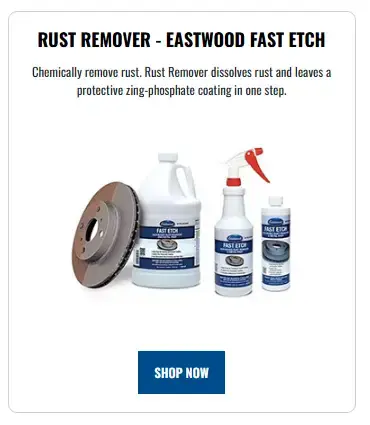
Rust removers dissolve oxidation and are useful when you want to expose clean steel. https://www.gtpracing.com/product-page/eastwood-rust-converter-quart-and-aerosol-kit .They are a strong choice for brackets, hardware, small fabricated pieces, and parts that can be soaked or kept wet with the solution. Once the part is clean, dry it immediately and apply a suitable coating. Bare steel can flash rust fast, especially in humid shop conditions.
Rust converters react with remaining iron oxide and change it into a more stable surface that can be coated. They help in pitted areas where full removal is difficult, but they still require preparation. Oil, wax, dirt, loose scale, and heavy grease prevent proper contact. Use a converter where rust remains in the pits after cleaning, not as a substitute for removing loose corrosion. https://www.gtpracing.com/product-page/eastwood-canada-rust-converter-eastwood-shop-rust-converter-gallon
Rust encapsulators and chassis coatings create a hard barrier over prepared metal and tightly adhered rust. They are useful on frames, underbodies, axle housings, inner fenders, engine bay parts, and other areas where blasting every square inch may not be practical. Their value comes from adhesion and coverage, so surface prep matters more than the word "encapsulate" on the can.
Primers are the bridge between the metal and the finish system. Epoxy primer is commonly used over properly prepared bare steel and repair areas because it provides strong adhesion and corrosion resistance. For bodywork, follow it with the appropriate surfacer, sealer, basecoat, and clearcoat system. For frames and undercarriages, a durable chassis coating or topcoat may be the final layer.
Match the Product to the Part
A frame is not a hood, and a trunk floor is not a valve cover. The coating must handle the environment the part will see.
For frame rails, suspension components, crossmembers, and underbody sections, prioritize chip resistance, chemical resistance, and coverage around welds, brackets, and seams. Blast or mechanically clean the surface, remove dust, degrease thoroughly, and use a coating system rated for chassis service. If the frame has enclosed rails, treat the inside as well. Rust often starts where you cannot see it, then works outward.
For floor pans, trunk pans, wheelhouses, and patch panels, protect both sides of the repair. The visible side may receive epoxy primer and a paint finish, while the underside needs seam sealer where panels overlap, then a durable underbody or chassis coating. Leaving the backside bare is one of the fastest ways to ruin fresh metalwork.
For body panels, clean metal and correct primer choice matter most. A rust repair product intended for rough chassis work may not sand, feather, or finish like a body-shop primer. Keep the paint system compatible from bare metal through topcoat. Mixing products without checking their intended use can cause lifting, poor adhesion, or solvent problems later.
For small parts, brackets, hardware, and fabricated components, removal and blasting are often the cleanest answer. Once the part is stripped, you can choose paint, powder coating, or another finish based on heat exposure, wear, and appearance. Powder coating is tough, but it is not automatically the best answer for every part. It can be difficult to repair after damage, and proper pre-cleaning is still mandatory.
Surface Prep Decides Whether the Coating Stays
Most coating failures are prep failures. A premium coating cannot bond through grease, silicone, wax, or loose rust. Start by scraping away heavy deposits and pressure washing dirty underbody parts when practical. Let the part dry completely before moving on.
Mechanically remove loose rust with blasting, abrasive wheels, sanding discs, needle scalers, or wire wheels. Blasting is often the best route for frames and complex parts because it reaches pits, corners, and welded seams. It also reveals thin metal, prior repairs, and cracks that were hidden under scale and undercoating.
Then degrease the surface with a proper automotive cleaner using clean towels. Do not wipe grime around with one dirty rag. Handle clean steel with gloves when possible, since fingerprints can leave contamination behind.
Pay close attention to seams, https://www.gtpracing.com/product-page/eastwood-brush-on-seam-sealer-quart-51657zp lap joints, spot-weld flanges, and boxed sections. These are water traps. If a seam is open or compromised, clean it out before sealing it. Applying seam sealer over active corrosion only locks moisture into the joint. Once the metal is stable and primed as required, seal the joint and coat it for the environment it will face. https://www.gtpracing.com/product-page/eastwood-autobody-seam-sealer-cartridge-black-51655z
Application Details That Matter
Read the product's technical instructions before mixing or spraying. Temperature, humidity, film thickness, recoat window, cure time, and reducer choice can change the result. A coating that looks dry on the surface may not be ready for a second coat, assembly, or exposure to chemicals.
Brush-on products are practical for frames, brackets, seams, and tight areas. A brush can work coating into welds and irregular surfaces, but it may leave a textured finish. Spray application provides more even coverage on larger panels, yet requires proper equipment, masking, ventilation, and personal protection. For a show-quality engine bay or painted chassis, spraying may be worth the extra prep. For a working truck frame, coverage and durability usually matter more than a flawless gloss level.
Avoid the temptation to apply one extra-heavy coat. Thick material can sag, trap solvent, or cure unevenly. Multiple controlled coats generally produce better protection. Keep an eye on edges, bolt holes, welds, and corners, where coatings naturally pull thin.
Common Rust Repair Mistakes
The first mistake is treating every rusty part with the same product. A converter may be useful in pits, but it is not the answer for a cracked frame. An encapsulating coating can protect a prepared rail, but it cannot replace the backside protection of a welded patch panel.
The second is ignoring moisture. If water can enter a seam, a boxed rail, or an unsealed overlap, rust will eventually return. Drain holes, seam sealing, cavity protection, and proper topcoats are part of the repair, not optional extras.
The third is rushing reassembly. Bolting suspension parts onto a coating that has not fully cured can scar the finish and create a starting point for corrosion. Give the system the cure time it calls for, then use touch-up material on any chips or installation damage.
GTPRACING carries restoration-grade rust treatments, https://www.gtpracing.com/product-page/eastwood-canada-rust-encapsulator-and-internal-frame-coating-combo-kit-98459 primers, chassis coatings, abrasives, blasting equipment, welders, and fabrication supplies because rust repair is rarely a one-can job. The right setup lets you clean the steel, repair what is weak, coat what is sound, and move on to the next stage of the build.
When you choose a rust repair product, buy for the actual condition of the metal and the service the part will see. Clean it deeper than you think you need to, protect both sides whenever possible, and give the repair enough time to cure before it goes back on the road.


Comments