


Automotive Rust Prevention Guide
- ERIC GIROUX
- May 20
- 6 min read
Rust usually starts where nobody looks first - inside seams, behind trim, under flaky undercoating, and in the boxed sections of a frame. A real automotive rust prevention guide has to deal with that reality. If you only focus on what looks bad from the outside, you miss the moisture, salt, and contamination that keep working underneath fresh paint.
That is why rust prevention is not one product or one weekend fix. It is surface prep, product choice, application method, and timing. Do the job right, and you slow corrosion for years. Cut corners, and even a good coating system can fail early.
What Actually Causes Rust on a Vehicle
Steel needs oxygen and moisture to oxidize, but on a vehicle that process speeds up when road salt, trapped mud, and damaged coatings enter the picture. Daily drivers in northern climates get hit hardest, especially around wheel wells, rocker panels, cab corners, floor pans, and frame rails. Trucks and older performance builds are especially vulnerable because they see abuse, heat cycles, and plenty of hidden cavities.
The hard truth is that rust often starts long before you can see bubbles in the paint. Seam sealer cracks, drain holes plug up, and factory coatings get chipped by gravel. Once moisture gets under the surface, it keeps moving. That is why prevention always works better than repair. https://www.eastwoodcanada.com/rust-system
Automotive Rust Prevention Guide: Start With Inspection
Before you buy coatings or primers, inspect the whole vehicle like a fabricator, not just an owner. Look at the obvious spots, but also get under the car with good light. Check frame crossmembers, suspension mounting points, inner fenders, battery trays, trunk floors, windshield channels, and the backside of body panels.
Use a pick, scraper, or wire brush to test suspect areas. If the metal flakes away or feels swollen, you are beyond light surface rust. If the steel still has integrity and the corrosion is limited to staining or light scale, you have a much better shot at stopping it before it becomes a cutting and welding job.
This inspection stage matters because product choice depends on what you are dealing with. Clean bare metal needs a different system than tightly adhered surface rust. Heavy scale, pinholes, and delamination are another category entirely.
Prep Is Where Rust Jobs Succeed or Fail
Most coating failures come back to poor prep. Not bad luck, not weather, not the brand on the can. Poor prep. Oil, wax, loose scale, old failing paint, and trapped moisture will ruin adhesion fast.
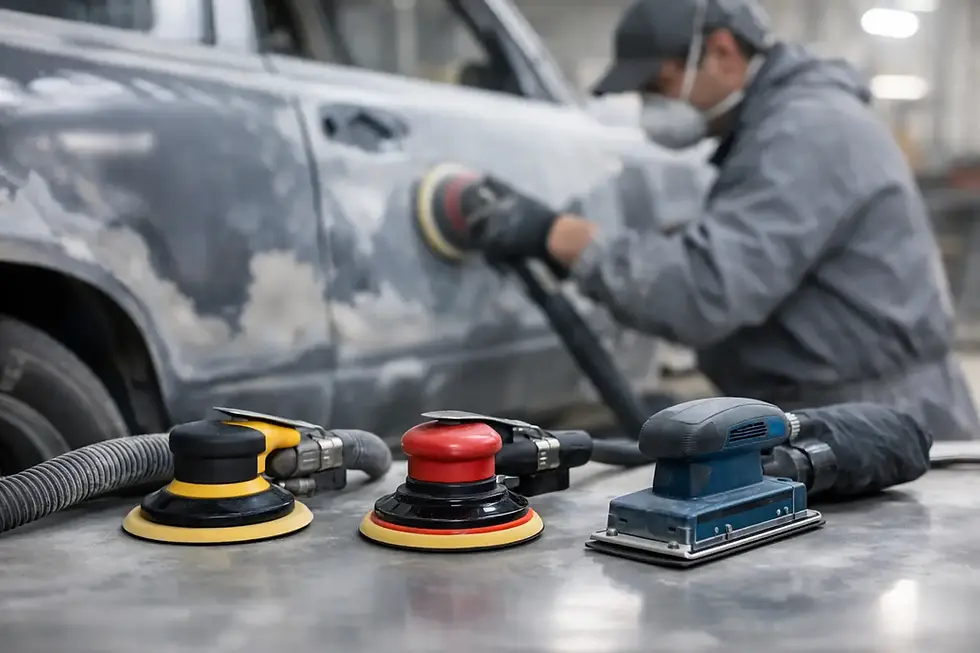
Start by degreasing the area properly. Road grime and underbody residue can hide in seams and spot welds, so one wipe is rarely enough. After that, remove loose rust mechanically. Depending on the part, that might mean a wire wheel, abrasive blasting, stripping disc, or needle scaler. For frames, suspension parts, and heavily textured steel, blasting usually gives the best foundation because it gets into pits and irregular surfaces better than a brush.
There is a trade-off here. Blasting is more thorough, but it takes more equipment and can be too aggressive for thin sheet metal if done carelessly. Hand and power tool prep are more accessible for DIY work, but they leave less uniform profiles and can miss deep corrosion in seams. Pick the method that fits the part and the condition of the metal.
If you expose bare steel, do not let it sit. Flash rust can start fast, especially in humid conditions. Prep and coating should happen in a tight window.
Choose the Right Rust Prevention System
https://www.eastwoodcanada.com/rust-converter
There is no single coating that belongs everywhere on a vehicle. A floor pan, a frame, and an exterior body panel do not live the same life. Good results come from using a system that matches the job.
For bare metal, epoxy primer is usually the right foundation. It seals well, bonds strongly, and gives you a stable base for topcoats. If the part will see UV exposure, epoxy alone is not always enough as a finished surface. It often needs a chassis black, urethane, or another topcoat depending on the application.
For areas with tight, well-adhered surface rust that cannot be fully blasted clean, rust encapsulator-type coatings can make sense. The key phrase is well-adhered. These products are not designed to bury loose scale or rotten metal. They work when the surface is stable, cleaned, and properly prepared.
For enclosed sections like rocker panels, door bottoms, frame interiors, and body cavities, cavity wax or internal frame coatings are often the better answer. Those areas trap moisture and are hard to reach with conventional paint. A wand-applied internal coating can reach where a brush never will.
For underbodies and chassis parts, use coatings built for abrasion and chemical exposure. A frame coating or durable chassis finish stands up better than general-purpose paint. If you are building a serious street car, tow rig, or race support vehicle, this is not where you want the cheapest shortcut. https://www.eastwoodcanada.com/internal-frame-coating
Automotive Rust Prevention Guide for Common Problem Areas
Frames deserve special attention because they rust from both sides. The outside gets hit by water, gravel, and salt. The inside collects moisture through factory holes and drain paths. Cleaning and coating only the visible outer rails leaves the hidden side of the problem untouched.
Floor pans and trunk floors usually fail because moisture gets trapped under insulation, carpet, or weatherstripping. If you are already inside the vehicle for restoration work, this is the time to inspect and coat those areas correctly. Waiting until rust comes through from below usually means more metal replacement later.
Wheel wells and inner fenders take constant abuse. Chip-resistant coatings help, but prep still matters. If mud and debris pack into lips and seams, even a tough coating system can get undermined.
Body seams, pinch welds, and drip rails are smaller areas, but they are frequent rust starters. These spots need clean metal, proper seam sealer where required, and complete coverage. Thin misses at an edge or seam will come back.
What People Get Wrong
A common mistake is spraying over rust because the can says rust preventive on the label. If the material underneath is loose, oily, damp, or actively flaking, the coating is only as strong as the junk below it.
Another mistake is relying on rubberized undercoating over unknown surfaces. In the right application, underbody products can help. Over existing corrosion or trapped moisture, they can seal in the problem and hide it until the metal is worse.
People also skip backside protection. You repair the visible side of a panel, paint it nicely, and leave the inside untreated. That repair may look great for a season, but corrosion can start again from the rear face.
The other big issue is product stacking without checking compatibility. Not every primer, encapsulator, topcoat, and seam sealer plays well together. If you are mixing systems, verify that the layers are meant to work as a package.
Maintenance Still Matters After Coating
Even the best rust prevention work is not permanent if the vehicle lives in harsh conditions. Salt, standing water, and stone impact will eventually wear down exposed surfaces. That means follow-up inspection is part of the job.
Wash the underbody regularly during winter use. Clean out drain paths. Touch up chips before they spread. Recheck frame interiors, suspension components, and the lower body every season if the vehicle sees rain, snow, or salted roads.
For stored vehicles, watch humidity and condensation. A car that sits in a damp garage can rust without ever seeing a winter road. Dry storage and airflow are cheap insurance.
When Prevention Turns Into Repair
There is a line where rust prevention stops being enough. If the metal is perforated, structurally weak, or separating at seams, you are in repair territory. That means cutting, welding, patch fabrication, and then coating the repaired area properly.
Trying to save severely compromised steel with coatings alone wastes time and materials. For restoration builds, race cars, and trucks that still need to work hard, structural integrity comes first. Fix the metal, then protect it.
That is where a shop-minded approach pays off. The same project may need abrasives, weld-through primer, epoxy, seam sealer, chassis coating, and internal frame treatment. Real results come from thinking through the whole sequence, not grabbing one miracle product and hoping for the best.
Build a System, Not a Shortcut
https://www.eastwoodcanada.com/internal-frame-coating
The best automotive rust prevention guide is simple at its core. Inspect honestly, prep aggressively, choose the right coating for the substrate and location, and protect the hidden side of the metal too. A frame coating on the outside, cavity protection on the inside, and proper primer under finished surfaces is a smarter approach than chasing cosmetic fixes.
If you are working on a classic restoration, a shop truck, or a street-and-strip build, rust prevention is not the glamorous part of the project. It is the part that keeps your fabrication, paint, and parts investment from getting eaten alive later. Bring rusty parts back to life when you can, replace bad metal when you have to, and treat corrosion control like every other serious part of the build - with the right tools, the right coatings, and no shortcuts.


Comments