


How to Powder Coat Wheels the Right Way
A wheel finish can make a clean build look finished or look half-done. If you're figuring out how to powder coat wheels, the real work is in the prep, not the spray. Get the metal clean, get the profile right, and control your cure cycle, and you'll end up with a finish that holds up to brake dust, road grit, and regular wash abuse.
Powder coating wheels is one of those jobs that rewards patience and punishes shortcuts. Wheels deal with heat, impact, chemicals, and constant brake contamination. That means this is not the place for loose prep work, marginal masking, or guessing at bake times.
How to powder coat wheels: what you're really doing
At a basic level, you're stripping the wheel to bare metal, cleaning it hard enough to remove everything that can cause failure, applying an electrostatically charged powder, and curing it at the correct metal temperature. The goal is not just color. The goal is adhesion, even coverage, and a cured film that can take real use. https://www.gtpracing.com/abrasives?currency=CAD
That process changes a little depending on whether you're working with cast aluminum, forged wheels, or old steel wheels from a restoration project. Aluminum wheels often need more care around outgassing and media selection. Steel wheels can hide rust scale in seams, around lug areas, and near the valve stem hole. Both can be coated well, but both need honest inspection before you waste time and material. https://www.gtpracing.com/product-page/eastwood-b60-abrasive-media-blast-cabinet?currency=CAD
Start with wheel condition, not color choice
Before you strip anything, inspect the wheel closely. Look for cracks, curb damage, bent lips, previous repairs, corrosion around the bead seat, and heavy pitting in the spoke pockets. Powder coat does not fix damage. It hides some cosmetic flaws, but it can also make a bad wheel look good enough that somebody ignores a structural problem.
If you're working on a race car, street-strip car, tow rig, or restored truck, be extra careful around the lug seats and center bore. Those areas matter more than finish. A wheel that looks great but no longer seats correctly is a problem you created in the booth.
Tires, valve stems, wheel weights, TPMS sensors, and bearings need to come off before anything else. Do not try to mask around mounted rubber and pretend it's close enough. It isn't.
Strip the old finish completely
If you want powder coat to last, get the old paint, clear, corrosion, and contamination off the wheel. Chemical stripping can help remove factory paint and old coatings, but blasting is what gives you the clean surface profile powder needs.
For aluminum wheels, use media that cleans without beating up the surface. The right media and pressure depend on the casting and how rough the existing finish is. Too aggressive, and you can texture the face more than you want. Too soft, and you'll leave corrosion buried in corners. On steel wheels, rust and scale usually require a more aggressive approach, especially on older restoration pieces.
After blasting, blow the wheel out thoroughly. Powder loves to find trapped media after you think the part is clean. Spoke junctions, valve stem holes, and lug bores are common problem spots.
Cleaning is where most failures start
https://www.gtpracing.com/product-page/copy-of-eastwood-pre-green-painting-prep-gallon?currency=CAD
A wheel can look clean and still fail. Oils from tire machines, silicone from detail products, grease from handling, and residue from old brake dust can all cause fisheyes, craters, or adhesion problems.
Use a proper degreasing and pre-paint cleaning process before coating. Many shops clean, blast, and then clean again because blasting alone does not remove every contaminant. If the wheel is aluminum, pre-baking can also help drive out trapped gases and oils from the casting. That step matters more on older cast wheels, where contamination has had years to soak in.
If you skip the outgas step on a porous casting, the wheel may look fine going into cure and come out peppered with defects. At that point, you're stripping and starting over.
Masking matters more than most people think
Not every surface on a wheel should be coated. Lug nut seats, mounting pads, center bores, stud contact areas, and some hub-centric surfaces should usually stay clean and within spec. Excess coating thickness in those areas can affect torque retention, fitment, and wheel centering.
Use high-temp masking tape, plugs, and caps made for powder coating temperatures. Regular tape will fail in the oven and turn into a mess. Mask with intent, not just appearance in mind. The best-looking wheel in the world is still wrong if the mounting pad is coated too heavily and the wheel won't sit flat.
This is also where you decide how far to coat into the barrel and backside. Full coverage gives a finished look and better corrosion protection, but it adds time and material. On a show-quality restoration or detailed street build, it's worth it. On some race applications, simpler can make more sense if serviceability matters more than cosmetics.
Applying powder to the wheel
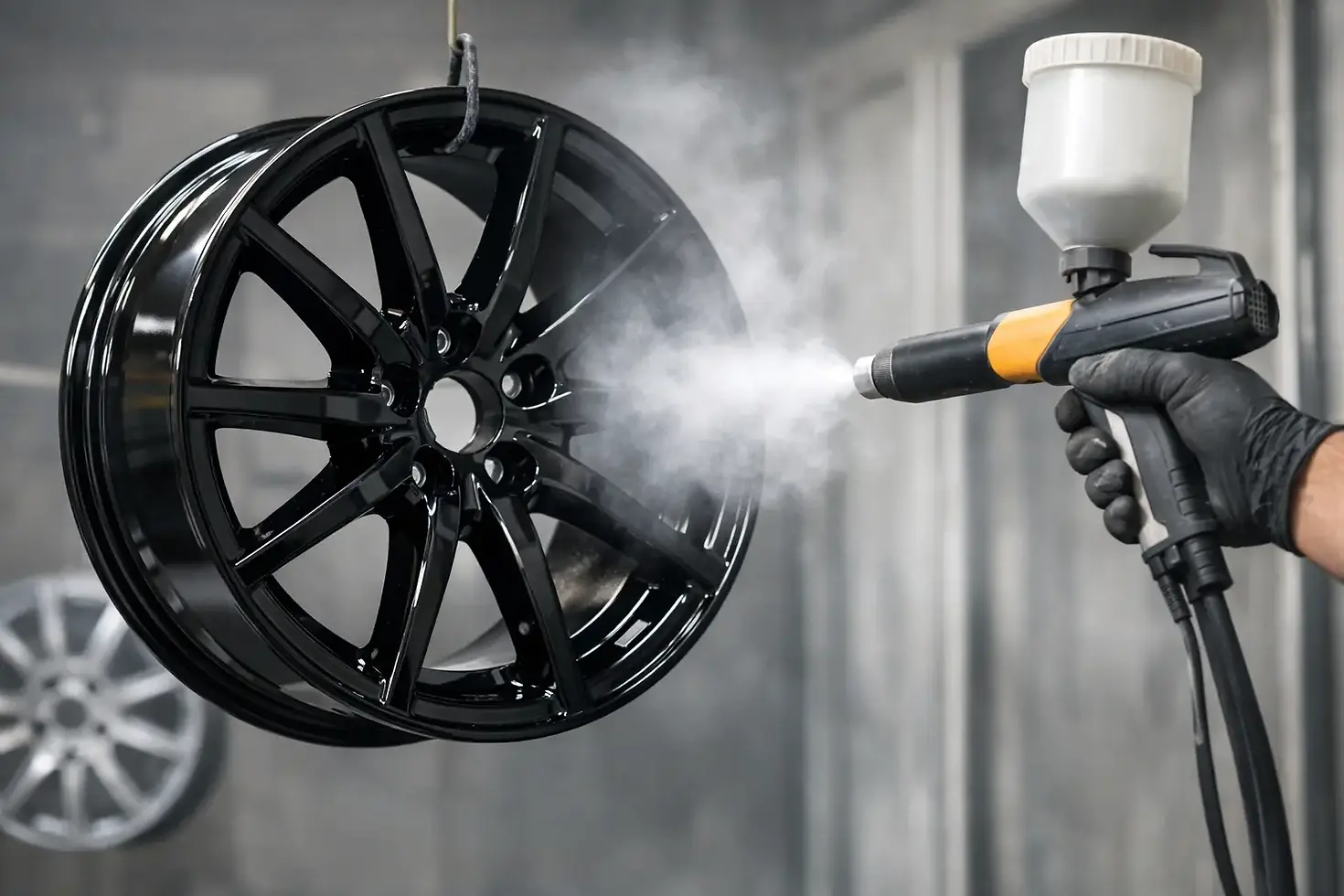
Once the wheel is clean, dry, grounded, and masked, apply the powder evenly with the gun set for control rather than maximum output. Wheels have recesses, spoke backs, barrel curves, and sharp transitions that can make powder stack up in one area and go thin in another.
Faraday cage effect is the usual fight here. Deep pockets and tight corners resist powder buildup. If you hammer those areas with too much voltage, you can make the problem worse. Back the settings down, adjust your angle, and build coverage patiently. A wheel is not a flat panel, and it shouldn't be coated like one.
Most builders do best with lighter, even passes rather than trying to flood the wheel in one shot. Watch your film build. Too thin and durability suffers. Too thick and you can lose detail, create texture problems, or interfere with fit on critical surfaces if masking wasn't exact. https://www.gtpracing.com/powder-coat-paint?currency=CAD
Cure schedule: follow metal temperature, not guesswork
This is the part that separates a coated wheel from a properly cured wheel. Powder cure schedules are based on part metal temperature and time at temperature, not just how long the wheel sat in a hot oven. A thick cast wheel takes longer to come up to temp than thin sheetmetal.
Use an infrared thermometer or, better yet, a proven process that verifies the wheel has reached the required cure temperature. If the powder calls for 10 minutes at 400 degrees metal temperature, that does not mean 10 minutes from the second you close the oven door.
Under-cured powder may look acceptable at first and then chip, stain, or wear early. Over-baking can shift color and gloss, especially on lighter shades, metallics, and clears. If you're doing a two-stage finish with a base color and clear, each product's cure window matters.
Single-stage vs two-stage wheel finishes
If you're after a basic satin black, gloss black, silver, or solid color, a single-stage wheel powder can be the right move. It's simpler, faster, and usually easier to repeat on future touch-up sets or matching spares.
A two-stage finish, usually color plus clear, can give more depth and additional protection, especially on metallics and specialty finishes. The trade-off is time, process control, and cost. On a street car that sees regular washing and harsh brake dust, the extra effort can pay off. On a hard-used race setup where wheels get swapped, marked up, and cleaned aggressively, simpler often wins.
Cooling, inspection, and reassembly
Let the wheel cool fully before handling it like a finished part. Freshly cured powder can still be vulnerable to marks while hot. Once it cools, inspect coverage inside the spoke pockets, around the lug holes, around the valve stem opening, and at every masked edge.
You're checking for thin spots, contamination, pinholes, rough texture, and tape lines that lifted during cure. Also inspect the back pad and center bore to make sure masking stayed where it belonged. A sharp-looking face doesn't make up for functional mistakes.
After inspection, remove masking cleanly, install new valve stems or TPMS components as needed, and mount tires carefully. A good tire machine operator can protect a fresh wheel. A careless one can scar it before the wheel even hits the car.
Common mistakes when learning how to powder coat wheels
Most wheel coating failures trace back to four things: poor stripping, weak cleaning, bad masking, or incorrect cure. Powder choice matters too, but surface prep and process control matter more.
Another common mistake is coating damaged wheels because the finish is being used to cover cosmetic problems. Powder is durable, but it is not body filler. If the wheel needs repair, do the repair first and confirm it's safe to use.
The last mistake is treating all wheels the same. A cast aluminum OE wheel, a forged performance wheel, and an old steel rally wheel do not always want the same blasting approach, pre-bake routine, or film build.
Is powder coating wheels worth doing yourself?
https://www.gtpracing.com/product-page/hotcoat-100kv-powder-coating-system-71860?currency=CAD
If you already handle blasting, coating, fabrication, or restoration work, it can absolutely make sense to do your own wheels. You control the prep, the masking, the finish choice, and the turnaround. For builders who already have the equipment, wheels are a smart in-house job.
If you're starting from zero, the equipment and learning curve are real. You'll need a solid powder gun, a dependable curing setup, proper abrasive blasting capability, cleaning chemicals, high-temp masking supplies, and enough space to handle wheels without contaminating them. That's why serious DIY builders and small shops usually do best when they source the same coating, prep, and shop equipment used across the rest of the project, not just for one set of wheels.
Do the job right, and powder-coated wheels will outlast most spray finishes and hold up to real use. The finish gets the attention, but the process is what makes it worth looking at every time the car rolls out of the garage.


Comments