


Powder Coat vs Paint: Which Holds Up?
If you are staring at a bare frame, a set of control arms, or a batch of brackets on the bench, the powder coat vs paint decision is not cosmetic fluff. It affects prep time, durability, repair strategy, cost, and how the part will look after real miles, heat cycles, road salt, and wrench time.
A lot of builders ask the wrong question first. They ask which finish is better. The better question is better for what. A street-driven truck frame, a race car bracket, a set of valve covers, and a restoration-correct engine bay do not all need the same answer.
Powder coat vs paint for automotive parts
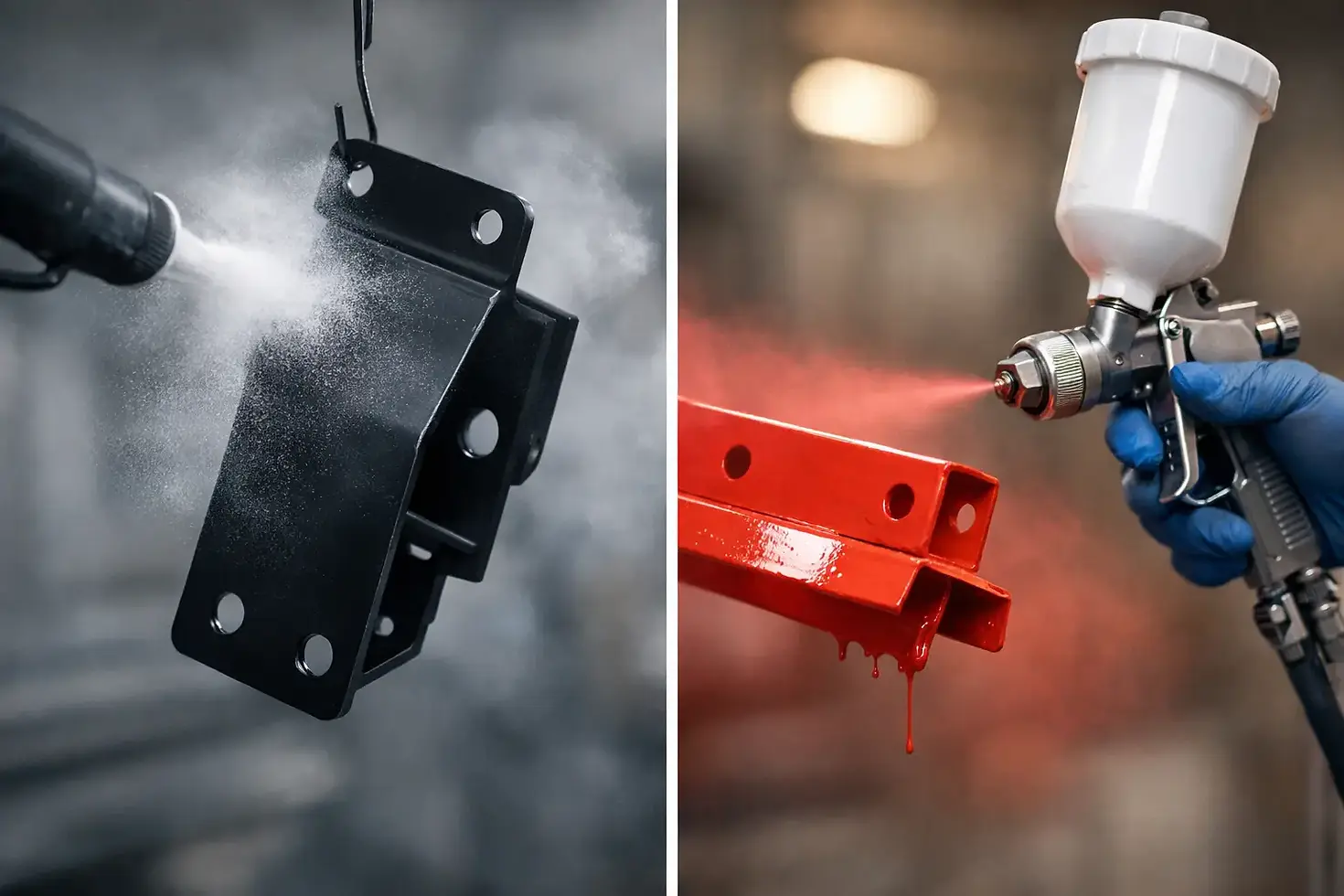
Powder coating is a baked-on finish. The part gets cleaned, prepped, electrically charged, coated with dry powder, and cured in an oven. When it is done right, it lays down a hard, even shell that resists chips, chemicals, and abrasion better than most basic paint jobs.
Paint is broader. It can mean epoxy primer and single-stage topcoat, urethane systems, chassis black, caliper paint, engine enamel, or specialty coatings built for rust protection, UV stability, or heat. That range is exactly why paint stays relevant. It is more flexible in process, easier to touch up, and often more realistic for the home shop.
If you want the short version, powder coating usually wins on impact resistance and clean uniform appearance. Paint usually wins on repairability, lower entry cost, and flexibility across different part sizes and materials. https://www.eastwoodcanada.com/product-page/eastwood-hotcoat-40kv-powder-coating-system-at-eastwood-canada-74100?currency=CAD
Where powder coating makes sense
Powder coating shines on parts that take abuse and benefit from a thick, consistent finish. Wheels, suspension arms, sway bars, crossmembers, brackets, pedal assemblies, and fabricated steel parts are common examples. If the part fits in an oven and can be completely stripped and cleaned, powder is hard to beat.
The finish is usually thicker than paint, which helps it stand up to road debris and regular handling. For undercar components and shop-built fabricated parts, that matters. A well-prepped powder-coated control arm can stay good-looking for years with less fuss than a budget spray job.
It also gives a uniform look that a lot of builders want. Gloss blacks, satins, silvers, and textured finishes can make a chassis or suspension package look finished without fighting runs, dry spray, or uneven coverage.
There is a catch. Powder coating is only as good as the prep under it. If contamination, rust scale, oil residue, or poor blasting is trapped under the coating, the finish can fail and hide the problem until it gets ugly. https://www.eastwoodcanada.com/product-page/hotcoat-pcs-250-benchtop-booth-and-oven-powdercoating-kit-98274z?currency=CAD
Where paint still wins
Paint is the smarter choice more often than people admit. If you are working in a home garage, doing partial restoration, matching OEM appearance, or coating something too large to bake, paint is usually the practical answer.
Frames are a good example. Some shops powder coat frames, and the result can look excellent. But a painted frame with the right primer and topcoat system is easier to service later. If you scrape it during assembly or want to weld on a tab later, you can repair the area without stripping the whole thing.
Paint also makes more sense on parts that see future modifications. Race cars change. Street and strip builds evolve. If you know a bracket may get moved or a mount may get revised, paint keeps the job serviceable.
Then there is heat. Some high-temp painted systems are better suited for engine parts, exhaust-adjacent components, and areas where standard powder may discolor or degrade. Not every powder formula is built for every temperature range, so assuming powder is always tougher can get expensive.
Durability is not just about hardness
A lot of people reduce this to one simple idea: powder is tougher, paint is weaker. That is too simplistic.
Powder coating is harder, but hardness is not the only thing that matters on a vehicle. Flexibility, adhesion, chip behavior, corrosion resistance, and the ability to repair damage all matter too. A very hard coating can still be a problem if moisture creeps in through a chip and starts lifting around the damaged area.
A quality paint system over properly prepped metal, especially with epoxy primer as a base, can hold up extremely well. On a driver or a restoration, the difference between a cheap paint job and a proper coating system is massive. Good paint is not the same thing as rattling on bargain black enamel and hoping for the best.
For parts that get direct rock hits, powder often has the edge. For parts that may need touch-up, paint can age better in the real world because you can maintain it.
Prep decides the winner more than the product
This is where most finish failures start. If the metal is not stripped, degreased, blasted, or chemically cleaned the right way, both systems can fail.
Powder coating demands clean bare metal. Any oil in weld seams, trapped blasting dust, silicone contamination, or hidden rust can come back during cure or after installation. The baked process can also outgas certain cast parts or porous metal if they were not pre-baked or prepped correctly.
Paint gives you more process options. You can blast, apply metal prep if needed, seal with epoxy, use fillers where appropriate, then build a finish around the part's actual use. That layered approach is one reason experienced restoration shops still rely heavily on paint systems.
If the prep is rushed, powder coating can look great on day one and fail underneath. If paint is rushed, it usually tells on itself faster. Neither one forgives laziness.
Cost, equipment, and shop reality
For a professional finish on small to medium parts, powder coating can be cost-effective, especially if you are batching multiple parts. Once setup is handled, the finish can be efficient and repeatable.
For the DIY crowd, paint has a lower barrier to entry. You can spray quality primers and topcoats without needing a curing oven big enough for suspension parts, crossmembers, or frames. That matters if you are trying to keep a build moving instead of waiting on outside coating work.
Powder coating also adds logistics. Parts need complete teardown, clean metal, masking of threads and machined surfaces, and transport to a shop unless you have the equipment in-house. Paint can often be done in stages as the build progresses.
If you are building for show quality, either system can work. If you are building on a schedule and know parts may need tweaks, paint usually creates fewer headaches.
Best uses for powder coat vs paint
For wheels, tubular suspension parts, fabricated brackets, and general undercar hardware, powder coating is often the better fit if the parts are final and fully prepped.
For frames, engine bays, firewall areas, body panels, roll cages that may get revised, and restoration work where future touch-up matters, paint is often the stronger choice.
For calipers, engine accessories, and heat-exposed areas, it depends on the exact product and temperature range. This is where reading the coating spec matters more than following internet folklore.
For rust-prone parts, do not assume the topcoat alone solves the issue. Corrosion protection starts underneath with proper cleaning, rust removal, and the right primer or base system.
What about appearance?
Powder usually gives a cleaner, more uniform production-style look. It is great for parts you want to look crisp and finished with minimal texture variation.
Paint gives you more control if you care about originality, gloss level, blendability, or layered finishes. If you are restoring a classic and trying to match factory appearance, paint is usually the better route. If you want a custom chassis look with consistent satin black across a pile of components, powder is attractive.
Neither one is automatically more professional. A cheap powder job can look plasticky. A well-sprayed paint system can look first-rate.
The right choice for your build
If the part is final, abuse-prone, oven-friendly, and you want a durable uniform finish, powder coating is a strong move. If the part may need repair, future welding, touch-up, or a more traditional restoration process, paint is usually the smarter choice. https://www.eastwoodcanada.com/product-page/hotcoat-100kv-powder-coating-system-71860-eastwood-gtpracing?currency=CAD That is the real answer to powder coat vs paint. It is not a brand war. It is a use-case decision. Builders who get the best results usually stop looking for one finish to solve every job and start choosing coatings the same way they choose tools - based on the work in front of them.
Do the job right, and the finish will work for you instead of becoming one more thing to redo next season.


Comments